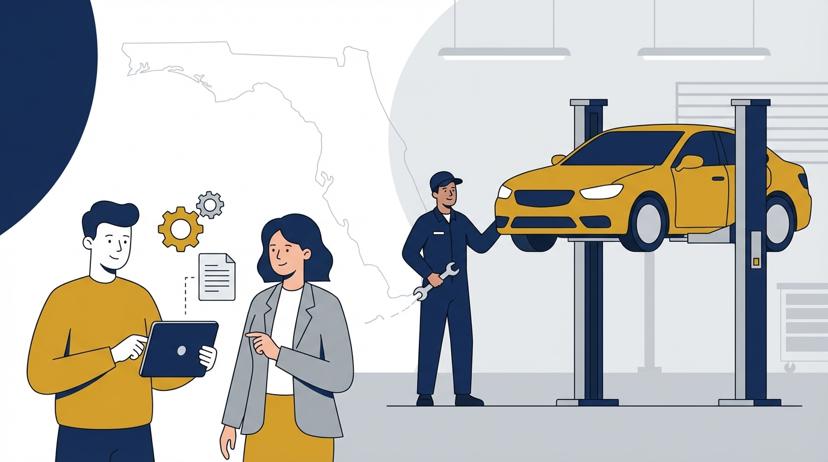
Florida auto repair laws, primarily the Florida Motor Vehicle Repair Act, protect consumers from unauthorized charges and poor workmanship. Shops must provide written estimates for repairs over $150 and cannot exceed that estimate by more than 10% or $10 without consent. Violations allow consumers to seek refunds or legal damages.
Key Takeaways
- The Florida Motor Vehicle Repair Act requires written estimates for any work exceeding $150.
- Mechanics cannot charge more than 10% above the written estimate without your explicit consent.
- You have a legal right to inspect and receive any replaced parts from your vehicle.
- If a shop holds your car hostage over a bill, you can post a bond with the court to release the vehicle.
- A formal demand letter citing specific Florida statutes is the most effective way to seek a settlement.
Navigating the aftermath of a botched engine repair or an unexpectedly high bill requires more than just frustration; it requires a functional understanding of auto repair laws florida. For many vehicle owners, the relationship with a mechanic is built on trust, but when that trust is broken through overcharging or poor workmanship, the law provides a specific set of tools to rectify the situation. Florida’s primary shield for consumers is the Florida Motor Vehicle Repair Act, a set of statutes designed to eliminate "five o'clock surprises"—those moments when a final bill far exceeds the original verbal agreement.
The Florida Department of Agriculture and Consumer Services (FDACS) oversees the registration and regulation of repair shops. Every shop performing work for compensation must register with the state, providing a layer of accountability before a wrench even touches a bolt. When a dispute arises, the goal is rarely to spend months in a courtroom. Trials are slow, expensive, and often unnecessary. Instead, the most effective path to a resolution involves using the specific requirements of the law to seek a settlement. By presenting a shop with clear evidence of statutory violations, consumers can often secure a refund or a repair fix without the "failure state" of a small claims trial.
Understanding the Framework of Auto Repair Laws Florida
The Florida Motor Vehicle Repair Act establishes clear boundaries for how shops must interact with their customers. When these boundaries are crossed, the consumer gains significant leverage in a dispute.
5 Critical Protections Provided by Auto Repair Laws Florida
1. The Mandatory Written Estimate
Under Florida Statute 559.905, if a repair is expected to cost more than $150, the shop must offer the customer three choices: a written estimate, being notified if the repair exceeds a certain amount, or waiving the right to an estimate altogether. If the shop fails to provide this written estimate and proceeds with expensive repairs, they may be in direct violation of state law. This document is the foundation of any dispute, as it sets the "ceiling" for the initial agreement.
2. The 10% Rule for Overcharges
One of the most powerful aspects of auto repair laws florida is the restriction on unauthorized price hikes. According to Florida Statute 559.909, a shop cannot exceed the estimated price by more than $10 or 10%, whichever is greater, but not to exceed $50, without first obtaining the customer's consent. For example, if a mechanic in Tampa provides a written estimate of $800 for a brake job but attempts to charge $1,100 at pickup without a prior phone call, the shop could not lawfully charge more than $850 — the $800 estimate plus the $50 statutory cap — without the customer's consent, so at least $250 of that increase is an unlawful charge. Consumers have the right to refuse any amount above the estimate plus that $50 cap.
3. The Right to Inspect Replaced Parts
Transparency is a requirement, not a courtesy. Consumers have the right to request the return of any parts that were replaced during the repair process. This request should ideally be made at the time the estimate is signed. If a shop claims to have replaced a transmission but refuses to show the old unit or provides a part that clearly did not come from the vehicle, it serves as strong proof of fraud or mechanic guessing at my expense.
4. Detailed Invoicing Requirements
Upon completion of the work, Florida Statute 559.911 requires the shop to provide a detailed invoice. This document must break down the cost of parts and labor, indicate if parts were new, used, or rebuilt, and include the shop's registration number. A vague invoice that simply lists "Engine Repair - $2,500" is a red flag and a likely violation of the Act. Detailed invoices allow consumers to verify if the labor hours charged align with industry standards.
5. Posting a Bond to Release a Lien
Perhaps the most stressful scenario is when a mechanic is holding a car hostage because of a disputed bill. In Florida, consumers do not have to leave their vehicle at the shop while the dispute unfolds. Under Florida Statute 559.917, a vehicle owner can post a "bond" with the clerk of the circuit court in the county where the shop is located. This bond consists of the amount stated on the repair invoice plus any accrued storage charges, less any amount already paid to the shop. Once the bond is posted, the clerk issues a certificate which, when presented to the shop, requires them to release the vehicle immediately. The dispute then moves to a forum where the shop must prove the charges were valid to claim the money from the bond.
Why "Standard" Solutions Often Fail Consumers
When faced with a mechanic bill higher than estimate, many consumers turn to generic online templates or attempt to argue with the shop manager in person. While these methods are common, they often lack the technical and legal weight necessary to move a stubborn business owner.
Generic templates are often ignored because they do not cite specific state statutes or address the unique facts of the case. A shop owner who receives a vaguely worded letter about "fairness" may assume the consumer is bluffing and has no intention of following through. Furthermore, verbal arguments at the shop counter rarely result in a win for the consumer. The shop has the physical possession of the vehicle, which gives them the initial upper hand.
The nuance that most people miss is that the goal of a dispute is not just to complain, but to create a "paper trail" that makes it more expensive for the shop to fight than to settle. In Florida, if a consumer wins a court case involving a violation of the Motor Vehicle Repair Act, the shop may be liable for the consumer's attorney fees and court costs. Highlighting this risk in a formal manner is often the catalyst for a settlement.
The Strategic Advantage of a Formal Demand Letter
The most effective way to resolve an auto repair dispute is to move the conversation from an emotional argument to a statutory one. This is achieved through a formal demand letter. This document serves as a final notice to the shop, outlining exactly which parts of the auto repair laws florida were violated and what is required to fix the problem.
Attorneys typically recommend a demand letter because it serves two purposes. First, it demonstrates to the shop that the consumer is organized, informed, and prepared to take the next step. Second, it serves as a critical piece of proof if the case eventually does go to court. It shows the judge that the consumer made a good-faith effort to resolve the issue before wasting the court's time.
A well-crafted demand letter should include:
- The specific dates of service and vehicle details.
- A clear description of the promised work vs. the actual outcome.
- Citations of the Florida Statutes that were violated (e.g., failure to provide a written estimate under F.S. 559.905).
- A specific deadline for a response (usually 10-14 days).
- A clear "demand," such as a refund of unauthorized charges or the completion of repairs at no additional cost.
Using a tailored demand letter is the first step in a professional dispute process. It signals that the consumer is no longer just a "frustrated customer," but a claimant who understands their rights under the law.
How DemandDraft Helps You Seek a Resolution
DemandDraft provides a platform that helps consumers pursue disputes without the high costs of hiring an attorney. The platform asks about the specific details of a dispute—such as the lack of a written estimate or unauthorized labor—and cites Florida statutes.
Instead of a generic template, DemandDraft generates a professional, high-impact demand letter that cites the Florida Motor Vehicle Repair Act. This approach works because it speaks the language that shop owners and their insurance companies understand: the language of liability. When a shop receives a letter that cites F.S. 559.909, the "10% overage" becomes a documented legal risk.
The platform simplifies the process by asking the consumer targeted questions about their experience. Did the shop provide an estimate? Did they call before adding work? Was the final bill higher than promised? By answering these questions, the consumer provides the data necessary for the platform to build a compelling case. This method moves the dispute toward a "success state" where the shop settles the matter quickly to avoid the risk of paying triple damages or attorney fees in court.
Strategic Steps to Take Right Now
If a shop in Florida is currently overcharging for repairs or refusing to return a vehicle, the following steps should be taken immediately:
- Gather All Paperwork: Collect every scrap of paper, including the initial intake form, any written estimates, text messages from the service advisor, and the final invoice.
- Document the Vehicle's Condition: If the repair was performed poorly, take photos or videos of the faulty work. If possible, have another registered shop provide a brief written inspection of the "fix."
- Identify the Violation: Compare the shop’s actions against the rules mentioned above. Did they exceed the estimate by more than 10%? Did they fail to give a written estimate for a $500 job?
- Avoid Verbal Confrontation: Stop arguing with the shop staff. These conversations are rarely recorded and can lead to heightened tensions without any legal benefit.
- Send a Formal Demand: Use a structured approach to put the shop on notice. This is the most critical step in starting the resolution process.
By following the rules set forth in the auto repair laws florida, consumers can shift the power dynamic. A shop that thinks they can get away with unauthorized repairs often changes their tune when presented with a professional demand that cites the Florida Motor Vehicle Repair Act. The goal is to get the car back on the road and the money back in the consumer's pocket, all while avoiding the slow and expensive reality of a courtroom.
Start your letter now to begin the resolution process today.
Frequently Asked Questions
What is the 10% rule in Florida auto repair?
Under Florida Statute 559.909, a repair shop cannot exceed the estimated price by more than $10 or 10%, whichever is greater, without first obtaining the customer's consent.
Can a mechanic in Florida keep my car if I refuse to pay an unfair bill?
Yes, they can claim a lien, but you can legally recover your car by posting a bond for the disputed amount with the clerk of the circuit court under Statute 559.917.
Are written estimates mandatory for car repairs in Florida?
Yes, for any repair expected to cost more than $150, the shop must offer a written estimate, a notification limit, or a signed waiver.
What should I do if a mechanic overcharges me in Florida?
Gather all paperwork, document the vehicle's condition, identify the specific statutory violation, and send a formal demand letter citing the Florida Motor Vehicle Repair Act.
Can I get my attorney fees paid in a Florida auto repair dispute?
Yes, if you win a court case involving a violation of the Motor Vehicle Repair Act, the shop may be held liable for your attorney fees and court costs.