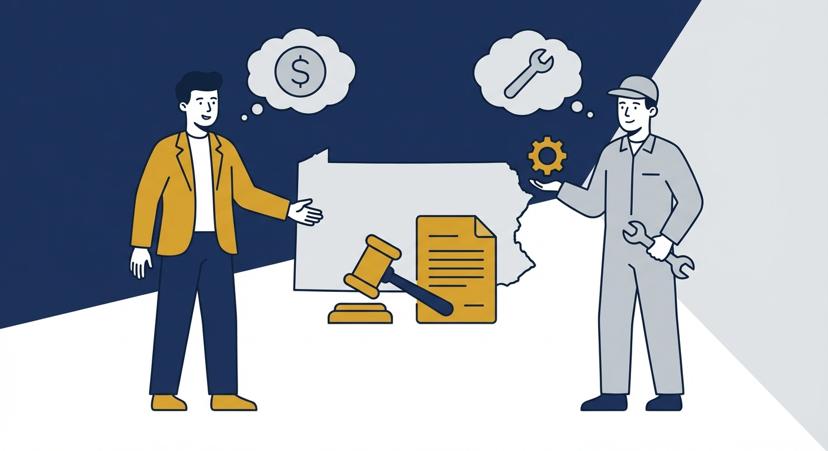
To sue a mechanic in Pennsylvania, first send a formal demand letter citing the Unfair Trade Practices and Consumer Protection Law. If they refuse to settle, file a claim in Magisterial District Court for up to $12,000. You may be eligible for treble damages if the shop engaged in fraudulent or deceptive conduct.
Key Takeaways
- Pennsylvania's UTPCPL allows for triple (treble) damages in cases of mechanic fraud or deceptive practices.
- A professional demand letter is often more effective and faster than going straight to court.
- Always obtain a third-party inspection from an independent shop to provide objective proof of negligent repairs.
- The small claims limit in Pennsylvania Magisterial District Courts is generally $12,000.
The Hidden Cost of Negligent Auto Repairs in Pennsylvania
When a vehicle leaves a repair shop in worse condition than when it arrived, the immediate instinct for many vehicle owners is to figure out how to sue mechanic pennsylvania. The frustration of paying for a fix that didn't happen—or worse, paying for damage caused by the technician—is a heavy burden. Beyond the financial loss of the repair bill, there are the secondary costs: missed work, rental car fees, and the persistent anxiety of driving an unsafe vehicle.
In Pennsylvania, the law recognizes that mechanics have a "duty of care" to their customers. When a shop fails to meet the standard of a reasonably competent professional, it results in negligence. Whether it is a brake job gone wrong, an engine rebuild that fails within a week, or unauthorized charges that appear on the final invoice, the consumer is left holding the bag. The reality is that the auto repair industry relies on a knowledge gap between the technician and the driver. When that gap is exploited, the consumer needs a way to level the playing field.
The financial stakes are often higher than just the invoice. According to research on negligent repairs, if a faulty repair leads to an accident, the shop may be liable for personal injury and property damage. However, even in cases where no accident occurs, the cost of "fixing the fix" can be double or triple the original estimate. This is where the dispute begins, and for most, the path to resolution feels like an uphill battle against a business that holds the keys to their most vital asset.
Why the "Court First" Approach is Often a Mistake
Many consumers believe that filing a lawsuit is the first step to getting their money back. While the right to sue mechanic pennsylvania exists, jumping straight into the Magisterial District Court is often the "failure state" of a dispute. Trials are slow, expensive, and unpredictable. In Pennsylvania, the statute of limitations for negligence is two years from the date of the incident, but waiting for a court date can take months of that time.
Traditional legal templates found online rarely work because they lack the specific pressure points required to make a shop owner settle. A generic letter saying "I am unhappy" or "I will sue you" is easily ignored. Shops see these every day. Furthermore, most people miss the nuance of the law. For example, Pennsylvania's Unfair Trade Practices and Consumer Protection Law (UTPCPL) is a powerful tool, but it requires specific violations to be cited correctly to be effective.
Relying on a "status quo" solution—like a basic complaint to the Better Business Bureau—frequently fails because these organizations have no enforcement power. They cannot force a shop to refund money. Similarly, while a BAR Complaint vs Demand Letter analysis shows that state agencies can investigate, they often focus on licensing rather than getting the individual consumer their money back. To get a refund or a repair credit, the consumer must present a case so strong that the shop realizes it is cheaper to settle than to go to court.
The Professional Demand Letter: A Mechanism for Resolution
The most effective way to resolve a dispute is to use a formal, well-organized demand letter without the overhead of a courtroom. This is the core mechanism of DemandDraft. Instead of a simple request for a refund, a professional demand letter uses the shop’s own documentation—estimates, invoices, and authorizations—against them.
Consumer protection laws in Pennsylvania state that shops must adhere to certain standards regarding disclosures and workmanship. When a demand letter is drafted using these specific rules, it signals to the shop that the consumer is prepared and informed. This shifts the power dynamic. The shop owner is no longer dealing with an "annoyed customer"; they are dealing with a potential legal liability that could cost them triple damages under the UTPCPL.
Attorneys typically recommend a demand letter as a mandatory first step. It serves as a "final warning" that creates a paper trail for the court, proving the consumer tried to resolve the issue in good faith. By using a Formal Demand Letter Checklist, a consumer ensures that every necessary detail—from the VIN to the specific breach of contract—is documented. This approach works because it puts the facts in front of the shop's insurance or legal counsel. When the facts show a clear violation of Pennsylvania repair standards, a settlement becomes the most logical business decision for the shop.
Strategic Steps to Sue Mechanic Pennsylvania Effectively
To successfully navigate a dispute and prepare to sue mechanic pennsylvania, a consumer must follow a disciplined process. The goal is to build a "proof pile" that makes the shop’s defense impossible.
1. Gather the Paper Trail
The foundation of any auto repair dispute is the documentation. In Pennsylvania, a shop should provide a written estimate before work begins. Compare this estimate to the final invoice. If the shop charged for parts that weren't installed or labor that wasn't performed, this is a primary evidence point.
- The Estimate: Did you authorize the work in writing?
- The Invoice: Does it list specific parts and labor hours?
- The Evidence: Keep the old parts if possible. Take photos of the "repair" immediately.
2. Identify the Legal Violation
Pennsylvania law is specific about what constitutes a violation. Under the UTPCPL, "engaging in any other fraudulent or deceptive conduct" is a catch-all that covers many bad mechanic scenarios. Common violations include:
- Representing that goods or services have sponsorship, approval, or characteristics they do not have (e.g., saying a part is OEM when it is used/aftermarket).
- Advertising goods or services with intent not to sell them as advertised.
- Failing to return a vehicle after the consumer has paid the agreed-upon price.
3. Send a Tailored Demand Letter
This is where the Auto Repair Demand Letter Guide becomes essential. The letter must state the facts clearly, cite the relevant Pennsylvania consumer protection codes, and provide a firm deadline for a response (usually 10-14 days). It should clearly state the "fix": a full refund, payment for a third-party inspection, or covering the costs of a different shop to repair the damage.
4. Leverage the "Treble Damages" Threat
One of the most powerful aspects of Pennsylvania's consumer law is the potential for "treble damages." This means a judge can award a consumer three times the actual damages, plus attorney fees. Mentioning this potential outcome in a demand letter is a significant motivator for a shop to settle. They would much rather pay a $2,000 refund now than risk a $6,000 judgment plus legal fees later.
5. Filing in Magisterial District Court
If the demand letter is ignored, the next step is the Magisterial District Court. In Pennsylvania, these courts handle "small claims" up to $12,000 (though this can vary slightly by county). This is a more informal setting than Common Pleas Court, and you do not necessarily need an attorney. However, having your demand letter and all evidence organized is what wins the case. For more on the rules of these proceedings, see the Small Claims Lawyer Rules.
Common Pitfalls in Mechanic Disputes
Many consumers undermine their own cases before they even start. Avoiding these common mistakes is critical to a successful resolution.
Emotional Escalation: Yelling at the service advisor or leaving a flurry of one-star reviews might feel good, but it often hardens the shop's resolve to fight you. A calm, professional approach backed by a formal letter is far more intimidating to a business owner.
Lack of Third-Party Verification: If you claim a mechanic ruined your engine, a judge will want to see a report from another mechanic confirming that. This is "proof" rather than "opinion." Always get a "post-mortem" inspection from a reputable, independent shop.
Waiting Too Long: While the statute of limitations is two years, waiting eighteen months to complain about a brake job makes it look like the issue was normal wear and tear. Action should be taken within days or weeks of discovering the problem.
Paying in Cash: It is much harder to dispute a transaction if there is no electronic trail. If you must pay to get your car back, pay by credit card and immediately start the Charged Unauthorized Repairs Dispute process. This allows you to potentially charge back the funds while your demand letter is pending.
Understanding the Pennsylvania Landscape
Pennsylvania's auto repair laws are designed to prevent "bait and switch" tactics. For instance, if a shop realizes a repair will cost significantly more than the original estimate, they are generally expected to contact the consumer for additional authorization. If they proceed without that consent and then refuse to release the car, they may be holding the car hostage, which is a serious violation.
The Magisterial District Court system in PA is accessible, but it is still a legal proceeding. The shop will likely show up with their own "expert" (usually the lead mechanic) to testify that the work was done correctly. This is why the demand letter is so vital—it locks in your version of the facts early. If the shop changes their story in court, you can point to the demand letter they received months prior as evidence of their inconsistency.
For those dealing with specific issues like Mechanic Storage Fees Notice, knowing the local rules is key. Shops often try to use storage fees as a way to pressure consumers into paying for bad repairs. A well-crafted demand letter can challenge the legitimacy of these fees if the delay in picking up the vehicle was caused by the shop's own failure to perform the repair correctly.
The Superior Way to Resolve Your Dispute
The traditional way to handle a bad mechanic—arguing at the counter, calling the police (who will say it's a "civil matter"), and then giving up—is exactly what the shop expects. The "new way" is to use a structured, law-based approach that treats the dispute like a business transaction.
DemandDraft provides the power to generate a professional demand letter that incorporates Pennsylvania-specific consumer protection language. By focusing on the "rules" of the auto repair industry, the platform helps consumers create a clear, formal document. This isn't just a letter; it is a strategic tool designed to encourage a settlement by laying out what court could cost the mechanic.
Whether the issue is a "weed smell" left in the car, a transmission that still slips, or an invoice that doubled without warning, the process remains the same. Document the failure, identify the rule that was broken, and send a formal demand. This is how you resolve the problem without the years of stress associated with a full-blown trial.
Start your demand letter to start the resolution process today. Start your letter now.
Frequently Asked Questions
Can I sue a mechanic for bad work in Pennsylvania?
Yes, you can sue for negligence or breach of contract if the repair failed to meet professional standards or if the shop charged for work not performed.
What is the small claims limit in PA?
Most Magisterial District Courts in Pennsylvania handle small claims disputes for amounts up to $12,000.
Do I need a lawyer to sue a mechanic in PA?
No, you are not required to have a lawyer in Magisterial District Court, though you must present organized evidence like invoices and inspection reports.
What are treble damages in PA consumer law?
Under the UTPCPL, a judge has the discretion to award you three times your actual financial losses if the mechanic's conduct was fraudulent.
How long do I have to sue a mechanic in Pennsylvania?
The statute of limitations for negligence and property damage in Pennsylvania is generally two years from the date the incident occurred.