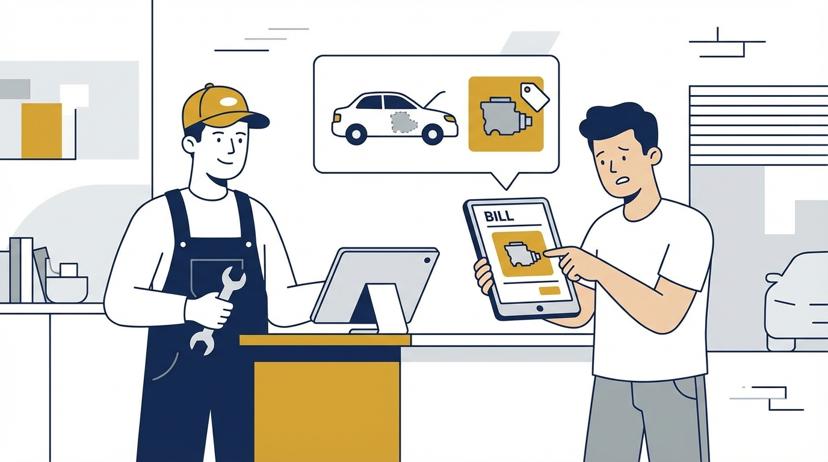
If a mechanic charged you for parts they didn't install, you are a victim of fraud and unauthorized repair. To resolve this, obtain a second opinion from a reputable shop to document the missing parts, then send a formal demand letter citing state-specific consumer protection laws to seek a settlement without a lawyer.
Key Takeaways
- Charging for uninstalled parts is a violation of state consumer protection acts and can lead to treble damages.
- A second opinion from another mechanic is the most critical evidence for proving repair fraud.
- Generic threats and BBB complaints often fail; formal, statute-based demand letters are more effective.
- Documentation like high-resolution photos and original invoices are essential for a successful legal claim.
Discovering that a mechanic charged for parts not installed is a frustrating realization that often surfaces weeks or months after a repair. This issue represents more than just a dishonest business practice; it is a direct violation of consumer protection laws and a significant safety risk. When a vehicle owner pays for a new timing belt, brake rotors, or suspension components that are never actually replaced, the underlying mechanical issues remain, potentially leading to catastrophic vehicle failure on the road.
The financial impact extends beyond the initial bill. Consumers often face "consequential damages," which occur when a failing old part causes damage to other healthy components. For example, if a shop bills for a new water pump but leaves the leaking original in place, the engine may eventually overheat, leading to a multi-thousand-dollar head gasket repair. In the eyes of the law, failing to install a part while billing for it is typically classified as a type of unauthorized repair or outright fraud.
In states like California, the Bureau of Automotive Repair (BAR) maintains strict regulations regarding documentation. If a shop cannot produce the "core" (the old part) upon request, or if a secondary inspection reveals the "new" part is actually an aged factory component, the shop faces severe regulatory scrutiny. However, simply knowing a shop did something wrong is only half the battle. The real challenge lies in pushing the shop to return the money without spending a year trapped in the litigation process.
Why "Status Quo" Solutions Fail When a Mechanic Charged for Parts Not Installed
When a consumer realizes they have been defraed, the initial instinct is often to return to the shop and demand a refund. This rarely works. Dishonest shops often rely on technical jargon to "gaslight" the customer, claiming the part was installed but looks old due to "road grime" or that the charge was actually for a "diagnostic fee" hidden in the fine print.
Many consumers then turn to generic internet templates. These "one-size-fits-all" demand letters are often ignored by shop owners because they lack specific legal teeth. A template that simply says "I will sue you" is a hollow threat. Professionals in the auto repair industry know that most people will not actually follow through with a lawsuit because the cost of an attorney often exceeds the value of the repair.
This leads to what is known as the "courtroom trap." While filing a small claims court case against a mechanic is a valid legal path, it is often a slow and exhausting process. In high-volume jurisdictions like Los Angeles or Houston, a court date might be six months away. Even if the consumer wins, the court does not collect the money for them. A judgment is just a piece of paper; the consumer still has to figure out how to seize assets or garnish bank accounts.
Furthermore, many consumers mistakenly believe that filing a complaint with the Better Business Bureau (BBB) will solve the problem. The BBB is a private entity with no enforcement power. A shop that is comfortable charging for parts they didn't install is unlikely to be intimidated by a negative rating on a third-party website. To get results, the consumer must move past emotional appeals and generic threats, instead using a structured, professional approach.
A New Approach: Using Formal Demands to Seek a Settlement
The most effective way to resolve a dispute where a mechanic charged for parts not installed is to use a formal, rule-based demand letter. This approach shifts the power dynamic by demonstrating that the consumer understands the specific statutes that govern the repair. Instead of arguing about "fairness," the demand letter focuses on "compliance."
The mechanism behind a successful demand is the integration of state-specific consumer protection acts. For instance, under the Texas Deceptive Trade Practices Act (DTPA), representing that goods are original or new if they are deteriorated, reconditioned, or second-hand is a specific violation that can carry "treble damages" (triple the original amount). When a shop receives a letter citing these specific codes, the risk calculation changes. They are no longer just dealing with an angry customer; they are dealing with a documented legal liability that could cost them three times the repair bill plus their own legal fees.
A professional demand letter functions as a "pre-litigation" tool. It provides the shop with a clear "off-ramp" to settle the dispute before it becomes a permanent public record. By using a platform like DemandDraft, consumers can generate a tailored, well-organized demand letter. This process involves:
- Identifying the Discrepancy: Pinpointing exactly which part of the invoice does not match the physical state of the vehicle.
- Citing the Statute: Referencing specific state laws, such as California’s requirement for written estimates and the return of old parts.
- Setting a Deadline: Providing a firm window (usually 10-14 days) for a refund before further action is taken.
- Preserving Evidence: Creating a paper trail that can be used in court if the shop remains non-compliant.
This method works because it signals to the shop owner that the consumer is prepared, organized, and aware of the rules. Most shops would rather pay a $1,200 refund now than risk a $4,000 judgment and a potential license suspension from a state regulatory board later.
Strategic Application: How to Prove Parts Were Not Installed
To successfully use a demand letter, the consumer must gather objective proof. Documentation is the foundation of any auto repair laws demand letter. If the dispute reaches a point where a third party must intervene, "he said, she said" arguments will fail.
Step 1: The Second Opinion
The most critical piece of evidence is a written inspection from a different, reputable shop. A consumer should take the vehicle to a second mechanic and ask for a "Parts Verification Inspection." This mechanic should document, in writing, whether the parts listed on the original invoice are actually present on the vehicle. For example, if the original shop charged for "New OEM Struts," the second mechanic can verify if the struts currently on the car have the factory markings from five years ago or if they are indeed new.
Step 2: Photo and Video Evidence
High-resolution photos are undeniable. If a shop charged for a new exhaust system but the pipes are covered in rust and old weld marks, a photo provides immediate "proof" of the discrepancy. It is helpful to have the second mechanic point out these details in the photos to ensure they are clear to someone who is not an expert in car parts.
Step 3: Review the Paperwork
Consumer protection laws in states like Florida and New York require shops to provide a detailed invoice. This invoice must break down parts and labor separately. If a shop provided a "lump sum" bill, they may already be in violation of state law. Compare the final invoice to the initial written estimate. Any charged unauthorized repairs are a major red flag and provide additional leverage in a demand letter.
Case Study: The "New" Alternator Dispute
A driver in Florida was charged $650 for a new alternator. Two weeks later, the car wouldn't start. A second shop inspected the vehicle and found a "remanufactured" alternator from a local junkyard had been installed instead of the "New OEM" part promised on the invoice. The consumer used a formal demand letter to cite the Florida Motor Vehicle Repair Act, which requires shops to disclose if parts are used or rebuilt. Within 48 hours of receiving the formal demand, the original shop issued a full refund for the part and the labor, fearing a report to the Florida Department of Agriculture and Consumer Services.
Seeking a Settlement: The Role of DemandDraft
The goal of a formal demand is to make the "failure state" of trial unnecessary. Trials are slow, expensive, and often unnecessary if the right pressure is applied early. DemandDraft provides the legal power consumers need by automating the creation of high-stakes demand letters. Instead of hiring an attorney for thousands of dollars, the platform allows consumers to pursue the issue themselves.
When a mechanic sees a DemandDraft letter, they see a professional document that outlines the facts, the law, and the consequences. It removes the emotion from the situation and replaces it with a business decision. The shop owner must decide: "Do I pay this refund now, or do I risk my business license and a much larger court judgment?"
By focusing on the rules—estimates, invoices, and authorizations—consumers can press a shop to settle. This approach protects the consumer's wallet and helps hold dishonest shops accountable.
Start your demand letter to start the resolution process today.
Frequently Asked Questions
How do I prove a mechanic didn't install the parts I paid for?
Take your vehicle to a second, independent shop for a 'Parts Verification Inspection.' Have them provide a written statement and photos confirming the parts on the invoice are not present on the vehicle.
Is it illegal for a mechanic to charge for parts they didn't use?
Yes, this is typically classified as fraud or a violation of state automotive repair acts. In many states, this can result in the shop losing its business license or paying triple damages.
What should I do if a shop refuses to refund me for uninstalled parts?
Send a formal demand letter that cites specific state laws and sets a clear deadline for a refund. This signals that you are prepared for legal action and can often lead to a settlement.
Can I sue a mechanic in small claims court for repair fraud?
Yes, you can sue for the cost of the parts, labor, and any consequential damages caused by the old parts. However, a formal demand letter is often a faster way to get paid than waiting for a court date.
What are 'treble damages' in an auto repair dispute?
Treble damages allow a consumer to receive three times the amount of their actual financial loss. Many state laws, like the Texas DTPA, allow for this if the shop's conduct was intentional or deceptive.