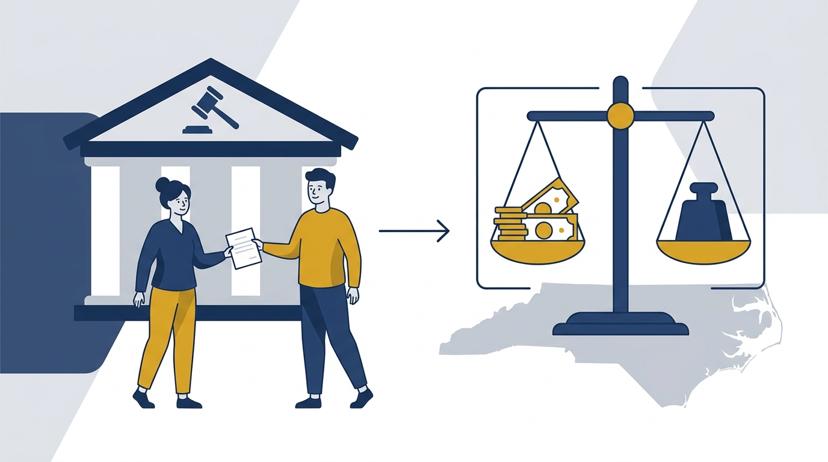
In North Carolina, the small claims court limit is $10,000 for civil cases. This threshold applies to most counties and covers disputes over auto repairs, overcharges, and negligence. Before filing, consumers should leverage the North Carolina Motor Vehicle Repair Act through a formal demand letter to seek a faster resolution.
Key Takeaways
- The North Carolina small claims court (magistrate court) limit is $10,000.
- Shops must provide a written estimate for any repairs exceeding $350 under state law.
- Final bills cannot exceed the original written estimate by more than 10% without authorization.
- Deceptive practices may entitle consumers to treble damages (triple the loss) and attorney fees.
- A formal demand letter is often more effective and faster than a court trial.
Navigating a dispute with a mechanic often leads consumers to consider legal action. Understanding the small claims court limit north carolina is the first step in determining how to recover funds for botched repairs or overcharges. In North Carolina, small claims court—also known as magistrate court—handles civil cases where the amount in dispute does not exceed $10,000. While some counties previously set lower limits near $5,000, the general threshold across the state is now $10,000, excluding interest and court costs.
For many vehicle owners, a $4,000 engine failure or a $2,500 unauthorized transmission repair fits perfectly within this window. However, walking into a courtroom should be viewed as a last resort. Trials are slow, expensive, and often unnecessary if the right pressure is applied early. The goal for any consumer should be to resolve the conflict before a judge ever sees the file. By leveraging specific state protections, such as the Auto Repair Laws North Carolina, vehicle owners can often seek a settlement by demonstrating exactly how the shop violated the law.
The Core Difference: Litigation vs. Professional Demand
The primary difference between filing a lawsuit and sending a formal demand letter lies in control and cost. When a consumer files a case in small claims court, they enter a system governed by rigid schedules and filing fees. In North Carolina, the magistrate's decision is final unless appealed, but the process of getting to that decision can take months.
The alternative is a strategic demand process. This approach uses the "rules of the game"—specifically the North Carolina Motor Vehicle Repair Act—to show the shop that losing in court will cost them significantly more than simply fixing the problem now. While a court can only award damages after a trial, a professional demand letter puts the shop on notice that they are currently in violation of statutes that allow for triple damages and attorney fees.
The reality is that most shops do not want to defend a case in front of a magistrate when they know they failed to provide a written estimate or performed unauthorized work. The threat of a public judgment and the potential for increased financial penalties often leads to a check being cut or a vehicle being released without further conflict.
Deep Dive: The Traditional Path of Small Claims Court
Small claims court is designed to be accessible, but it remains a "failure state" for resolution. It represents the point where communication has completely broken down. According to the North Carolina Judicial Branch, the process requires filing a "Complaint in Small Claims Action" and paying a filing fee, which generally starts around $96 but varies by county.
The Procedural Hurdle
Once a case is filed, the defendant (the repair shop) must be served with a summons. This often involves paying an additional fee for the sheriff to deliver the paperwork. If the shop is a corporation, the consumer must correctly identify the registered agent. A mistake in the paperwork can lead to a dismissal, forcing the consumer to start over and pay new fees.
The Evidence Burden
In court, the consumer bears the burden of proof. They must provide invoices, photographs, and witness testimony to prove the mechanic was negligent or deceptive. In North Carolina, while magistrates may be more lenient with rules of evidence than superior court judges, the consumer still needs to prove "damages." If a mechanic caused additional damage to a vehicle, the consumer may need an estimate from a second shop to prove the cost of the fix.
The Waiting Game
Even with a $10,000 limit, the recovery is not immediate. If a consumer wins, the shop has 10 days to appeal the judgment to District Court. If they appeal, the entire process starts over in a more formal setting where attorneys are frequently involved. This can turn a simple dispute into a year-long battle.
Deep Dive: The Strategic Approach of a Formal Demand
A superior way to handle a dispute is to use a formal demand letter without the immediate need for a courtroom. This method relies on the "mechanism" of citing specific violations of the North Carolina Motor Vehicle Repair Act to create immediate financial risk for the shop.
Leveraging the $350 Estimate Rule
Under N.C. Gen. Stat. Section 20-354.3, if repair work will exceed $350, the shop must provide a written estimate before starting the work. If a shop performs a $1,500 repair without providing that document or obtaining a signed waiver, they have committed a statutory violation. A professional demand letter highlights this specific section, informing the shop that their failure to provide an estimate makes the bill legally questionable.
The 10% Overage Protection
Another powerful tool is N.C. Gen. Stat. Section 20-354.5. This law states that a shop cannot charge more than 10% above the written estimate without obtaining new authorization. If a consumer was quoted $500 but the final bill is $800, the shop is in direct violation of the law. By citing this statute in a demand, the consumer shows the shop that the law is on the driver's side.
The Threat of Treble Damages
The most significant leverage in North Carolina is the North Carolina Unfair and Deceptive Trade Practices Act (UDTPA), specifically N.C. Gen. Stat. Section 75-1.1. If a shop's conduct is found to be deceptive—such as misrepresenting that a repair was completed when it wasn't—the court is required to award "treble damages" under N.C. Gen. Stat. Section 75-16. This means the consumer receives three times the actual amount of the loss. A demand letter that mentions the possibility of treble damages changes the math for the repair shop owner.
Why a Professional Demand Letter Outperforms the Courtroom
The bottom line is that a demand letter creates an opportunity for the shop to "make it right" before the situation becomes a public record or a triple-cost liability.
Example 1: The Unauthorized Engine Swap
Consider a scenario where a driver in Greensboro drops off their truck for a simple oil leak. The shop calls two days later and says they found a cracked block and replaced the entire engine for $6,000. The driver never signed an estimate and never authorized an engine replacement.
Instead of immediately filing for the small claims court limit north carolina, the driver sends a formal demand. The letter cites N.C. Gen. Stat. Section 20-354.8, which prohibits charging for repairs not expressly authorized. The letter also points out that under N.C. Gen. Stat. Section 20-354.9, a prevailing consumer can be awarded attorney fees. Faced with the prospect of paying $18,000 (treble damages) plus the driver's legal fees, most shops will negotiate the bill down significantly or waive the unauthorized charges.
Example 2: The "Hostage" Vehicle
In Charlotte, a shop refuses to release a car because the owner won't pay a storage fee that was never disclosed. The owner knows that under N.C. Gen. Stat. Section 20-354.3, any storage charges must be disclosed in the initial estimate.
The owner uses a Formal Demand Letter Checklist to ensure they include the right statutory language. The demand letter informs the shop that withholding the vehicle to coerce payment of undisclosed fees is a violation of the Act. The shop, realizing they are on the wrong side of a very specific law, typically releases the car to avoid a lawsuit that they are mathematically certain to lose.
The DemandDraft Mechanism
DemandDraft simplifies this entire process by taking the facts of a dispute and building a letter that cites North Carolina statutes. Instead of a consumer having to spend hours reading through the General Statutes, the platform organizes the facts—such as the invoice rules in N.C. Gen. Stat. Section 20-354.6—and builds a professional demand.
This mechanism works because it gives the consumer a structured system instead of a blank page. It produces a document that looks and sounds like it was drafted by someone who spends all day in a courtroom, even though the consumer is handling the dispute themselves. It provides the "proof" needed to show the shop that the consumer is serious.
Common Pitfalls: Why Doing It Wrong Costs More
Many consumers attempt to resolve these issues by simply arguing with the shop manager or leaving a negative review online. While these actions might feel good, they rarely result in a refund.
- The Verbal Agreement Trap: In North Carolina, the law specifically requires written estimates for repairs over $350. Relying on a "he said, she said" conversation in court is difficult. A demand letter pushes the shop to acknowledge the lack of written documentation.
- Ignoring the 10-Day Appeal Window: If a consumer does go to court and wins, they often forget that the shop can appeal. A demand letter settlement is usually final and involves a signed release, preventing future headaches.
- Failing to Request Parts: Under N.C. Gen. Stat. Section 20-354.5, consumers have a right to inspect or keep replaced parts if requested at the time of the work order. Many people forget to ask for this "proof" of repair, making it harder to win in court later.
What Most People Miss: The Magistrate's Perspective
It is important to note that while North Carolina law does not strictly require a demand letter before filing a small claims case, many magistrates expect to see one. As noted by Legal Aid of North Carolina, showing the court that a reasonable attempt was made to resolve the matter before filing can weigh heavily in the consumer's favor. It demonstrates that the consumer is not being litigious, but is simply seeking the protections guaranteed to them by the state.
Furthermore, a demand letter serves as a "roadmap" for the magistrate. If the case does end up in court, the consumer can hand the magistrate the demand letter and say, "I pointed out these three statutory violations on this date, and the shop refused to comply." This makes the magistrate's job easier and increases the likelihood of a favorable ruling.
The Superior Path to Resolution
The small claims court limit north carolina provides a safety net, but the demand letter is the ladder that lets you climb out of the dispute without falling into the "failure state" of a trial. By using the North Carolina Motor Vehicle Repair Act as a shield, consumers can protect their finances and their vehicles from predatory shop practices.
The most effective way to handle a mechanic who has overcharged, performed unauthorized work, or failed to fix a problem is to speak the language of the law. Citing specific statutes like N.C. Gen. Stat. Section 20-354.3 or Section 75-1.1 sends a clear signal: the dispute is no longer about an opinion; it is about a violation of state law.
Start your demand letter to start the resolution process today. Start your letter now and use the power of North Carolina’s consumer protection laws to get the results you deserve.
Frequently Asked Questions
What is the maximum I can sue for in NC small claims court?
The maximum amount you can sue for in North Carolina small claims court is $10,000, excluding interest and court costs.
Do I need a lawyer for small claims court in North Carolina?
No, small claims court is designed for individuals to represent themselves without an attorney, though you are permitted to have one if you choose.
What is the $350 rule for NC mechanics?
Under N.C. Gen. Stat. Section 20-354.3, repair shops must provide a written estimate for any work that will cost more than $350.
Can a mechanic charge more than the estimate in NC?
A mechanic cannot charge more than 10% above the written estimate without obtaining additional authorization from the customer.
What are treble damages in North Carolina?
Treble damages are a legal remedy where the court awards three times the actual financial loss to a consumer if a business is found to have engaged in unfair or deceptive trade practices.