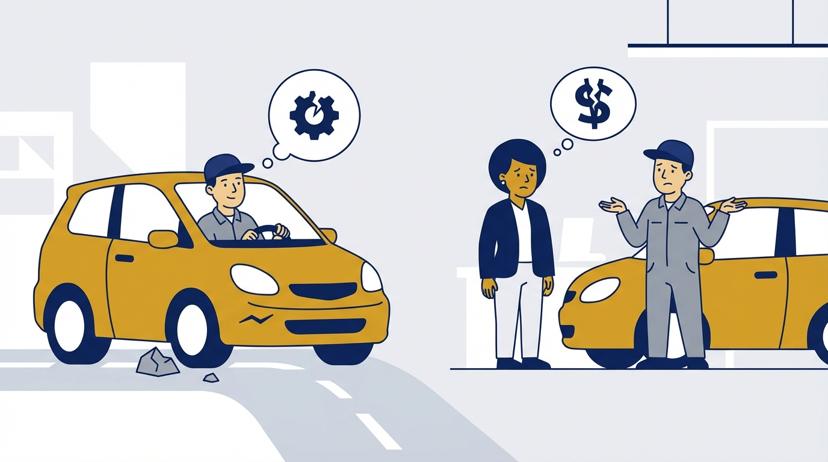
If a mechanic damages your car while driving, the shop is generally liable under the legal concept of bailment. Because they have 'care, custody, and control' of your vehicle, they must return it in the same condition it was received. You can seek compensation for repairs, diminished value, and loss of use.
Key Takeaways
- The legal concept of 'bailment' holds shops responsible for your car's condition while in their possession.
- Shops are liable for both physical repair costs and the 'diminished value' caused by a new damage history.
- Avoid verbal agreements; document all damage and communications in writing to establish a formal paper trail.
- Filing an insurance claim may fix the car but often leaves you responsible for the deductible and higher premiums.
Discovering that a vehicle has been returned with fresh body damage, a cracked windshield, or signs of a joyride is a violation of the consumer-mechanic relationship. When a vehicle is handed over for repair, a legal concept known as "bailment" is created. This means the shop accepts "care, custody, and control" of the asset. Under this arrangement, the shop is responsible for returning the vehicle in the same condition it was received, minus the agreed-upon repairs. If a mechanic damaged my car while driving, the shop is generally liable for the costs of restoration.
The damage is rarely just cosmetic. There is a secondary financial impact known as "diminished value." Even if the shop agrees to fix a dent they caused, the vehicle now has a damage history that may appear on reports like Carfax, lowering its resale value. Furthermore, the loss of use—the time spent without a vehicle while it undergoes secondary repairs—adds an additional layer of frustration and expense. In states like Florida and Texas, consumer protection statutes allow for the recovery of these types of economic damages when a business fails to exercise reasonable care.
Most consumers feel a sense of powerlessness in these moments. The shop might claim the damage was pre-existing or that a "test drive" was necessary and the incident was an unavoidable "road hazard." However, the burden of proof often shifts to the shop once it is established that the vehicle was in their exclusive possession. Without a strategic approach to recovery, the owner is often left paying the deductible for an insurance claim or driving a vehicle that is worth thousands less than it was 24 hours prior.
Why Traditional "Status Quo" Solutions Often Fall Short
When a dispute arises over vehicle damage, most people follow a predictable, yet often ineffective, path. They start with an emotional confrontation at the service counter. While venting frustration might feel good, it rarely results in a check being cut. Service managers are trained to deflect liability and protect the shop’s bottom line. Without a formal paper trail, verbal promises to "buff it out" or "take care of it later" frequently vanish once the customer leaves the lot.
The second common mistake is jumping straight to insurance. While filing a claim with a personal auto policy might get the car fixed, it often results in the owner paying a deductible and facing potential premium increases. Insurance companies may eventually subrogate—sue the shop’s garage keepers' insurance to get their money back—but they rarely fight to recover the owner's out-of-pocket expenses or diminished value.
Finally, many consumers view the legal system as an "all or nothing" proposition, believing they must either accept the damage or file a lawsuit. Trials are slow, expensive, and often unnecessary. In California, for instance, the California Small Claims Limits may allow for recovery up to $12,500, but the time investment required to prepare for a hearing can
Frequently Asked Questions
Is a mechanic liable for damage during a test drive?
Yes. Under the principle of bailment, the shop is responsible for the care and custody of your vehicle and must return it in the condition it was received.
What is diminished value in an auto repair dispute?
Diminished value is the loss in a vehicle's market resale value because it now has a damage history on reports like Carfax, even if the repairs were completed.
Should I use my own insurance if a mechanic crashes my car?
While your insurance may cover repairs, you will likely have to pay a deductible and may see premium increases. It is often better to hold the shop's garage keepers' insurance accountable.
How do I prove the mechanic caused the damage?
The burden of proof often shifts to the shop once you establish the vehicle was in their exclusive possession. Photos from check-in and a prompt inspection upon pickup are critical evidence.
Can I sue a mechanic for car damage in small claims court?
Yes, if the shop refuses to pay, small claims court is a common venue for recovery. For example, California allows claims up to $12,500 for individuals.