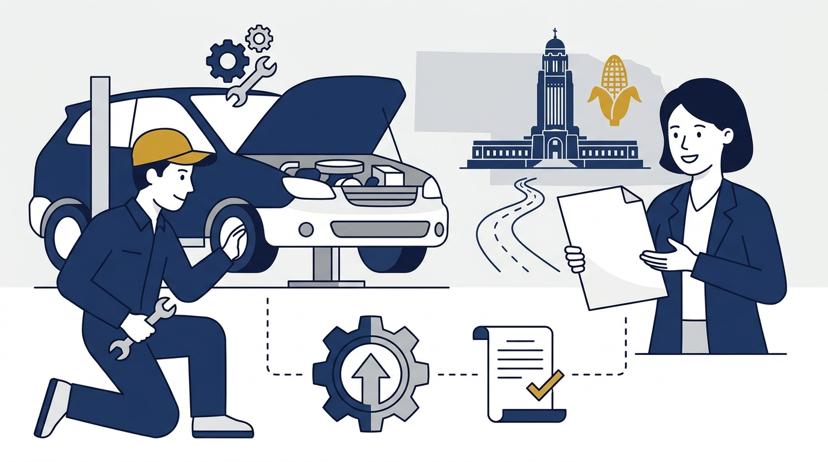
Nebraska protects auto repair consumers primarily through the Consumer Protection Act (CPA) and the Uniform Deceptive Trade Practices Act. These laws prohibit unfair or deceptive practices, such as unauthorized repairs or misrepresenting parts. While Nebraska doesn't require written estimates by specific statute, billing without authorization is often considered an actionable deceptive practice.
Key Takeaways
- The Nebraska Consumer Protection Act (CPA) allows consumers to sue for actual damages and attorney fees.
- Shops cannot legally charge storage fees unless they notify the owner via certified mail first.
- Unauthorized repairs and bait-and-switch part tactics are violations of the Deceptive Trade Practices Act.
- A formal demand letter is often more effective and faster than filing a Small Claims Court case.
- Nebraska common law requires mechanics to perform work with 'reasonable care' and professional skill.
Navigating auto repair laws in Nebraska requires an understanding that the state does not have a single, dedicated "Auto Repair Act." Instead, Nebraska protects consumers through a combination of general consumer protection statutes and long-standing common law principles. When a mechanic fails to fix a vehicle, overcharges for services, or performs unauthorized work, the resolution often depends on how effectively a consumer can cite these rules to seek a settlement.
While many people believe that a courtroom is the only place to find justice, trials are slow, expensive, and often unnecessary. The most effective way to resolve a dispute with a shop is to demonstrate a clear understanding of the law through a formal demand. This approach treats the legal system as a last resort, focusing instead on using the rules to reach a business-to-business resolution.
Definition & Core Concepts of Nebraska Auto Repair Protections
In Nebraska, the primary shield for car owners is the Nebraska Consumer Protection Act (CPA). Because there is no specific statute governing every move an independent repair shop makes, the CPA fills the gap by prohibiting "unfair or deceptive acts or practices in trade or commerce."
The Consumer Protection Act (CPA)
Under Neb. Rev. Stat. 59-1602, any business practice that is unfair or deceptive is illegal. Regarding auto repair services, this covers a wide range of misconduct, from bait-and-switch advertising to billing for parts that were never installed. The power of the CPA lies in its private remedy. According to Neb. Rev. Stat. 59-1609, a consumer who has been harmed by these practices can sue for actual damages, costs, and reasonable attorney's fees.
Nebraska Consumer Protection Act details
The Uniform Deceptive Trade Practices Act (UDTPA)
Another layer of protection is found in the Nebraska Uniform Deceptive Trade Practices Act. This law specifically targets misrepresentations. For example, if a shop represents that parts are original equipment manufacturer (OEM) quality when they are actually used or inferior aftermarket parts, they have violated section 87-302. While this act is often used for seeking injunctions (stopping the business from continuing the practice), it serves as powerful evidence of wrongdoing in a broader dispute.
Common Law Duties
Beyond statutes, Nebraska recognizes "common law" duties. This means that by taking on a repair job, a shop enters into a contract and assumes a duty of "reasonable care." If a mechanic is negligent—meaning they did not use the skill and care expected of a professional—they can be held liable for the resulting damage.
Proving mechanic negligence
Key Components and Requirements for Nebraska Shops
Because Nebraska’s laws are minimalist compared to states like California or Florida, the "rules of the road" for shops are often derived from what is considered "fair" under the CPA. Understanding these specific requirements is essential for any consumer looking to fix the problem without heading to court.
1. Estimates and Authorizations
In many states, a written estimate is required by law before any work begins. In Nebraska, while there isn't a specific "Estimate Statute" for independent shops, performing repairs and billing a consumer without a prior written estimate or authorization is generally viewed as an unfair practice under Neb. Rev. Stat. 59-1602.
Example: Imagine a driver in Omaha drops off their truck for a simple oil change. The shop calls later and says they replaced the entire braking system, presenting a bill for $1,200. Because the consumer never authorized these additional repairs, the shop has likely committed an unfair practice. The consumer may be entitled to recover the unauthorized charges as actual damages.
Unauthorized car repairs
2. Invoices and Documentation
A shop must provide documentation that accurately reflects the services performed. If a shop fails to provide an itemized invoice, it becomes difficult for the consumer to verify what they paid for. Under the CPA, obscuring or misrepresenting charges through a lack of documentation is actionable. For more information on how these documents serve as proof, consumers often look at the Definition Of Consumer Protection Act.
3. The "Certified Mail" Rule for Storage Fees
One of the most specific statutes in Nebraska involves storage fees. Many shops try to pressure consumers by threatening to charge daily storage fees while a dispute is ongoing. However, Neb. Rev. Stat. 52-201 sets a very high bar for the shop.
A repairer cannot assess any additional fees, such as storage, unless they first send the owner a notice by certified mail. This notice must state:
- That the shop has possession of the vehicle.
- The intent to assess a reasonable fee.
- The date the fee begins.
- The specific amount or rate of the fee.
If a shop attempts to charge storage fees without sending this certified letter, those fees are generally not secured by their lien, and the consumer can challenge them.
4. Defective Workmanship and Negligence
If a shop fails to properly repair a vehicle, the consumer has a claim for breach of contract or negligence. Nebraska courts recognize that a shop has a duty to perform repairs with the care and skill of a reasonably competent mechanic.
Example: A driver in Lincoln pays for a head gasket replacement. Two days later, the engine overheats because the mechanic failed to properly bleed the cooling system, causing a total engine failure. Under Neb. Rev. Stat. 25-207, the consumer can seek compensatory damages for the cost of a proper repair and the loss of use of the vehicle.
Why This Matters Now: The High Cost of Silence
Waiting to resolve an auto repair dispute is a strategic mistake. In Nebraska, the longer a vehicle sits in a shop, the more leverage the shop thinks they have. They may believe the consumer will eventually cave just to get their car back. Furthermore, while the statute of limitations for most of these claims is four years (under Neb. Rev. Stat. 59-1612 for the CPA and Neb. Rev. Stat. 25-207 for negligence), physical evidence and witness memories fade quickly.
The Problem with Small Claims Court
Many consumers assume their only option is to file Small Claims Court mechanic papers. While Small Claims is an option, it is often a "failure state."
- Time: It can take months to get a hearing.
- Stress: Presenting a case against a professional mechanic in front of a judge is intimidating.
- Collection: Even if a consumer wins a judgment, the court does not collect the money for them.
Small claims court vs demand letters
A better path is to use the threat of legal action to seek a settlement now. A shop owner who receives a professional demand letter citing specific Nebraska statutes, such as the CPA or the certified mail requirement for storage fees, realizes that the consumer is prepared and knowledgeable. This changes the calculation for the shop from "How much can we get away with?" to "How do we avoid a costly legal headache?"
The Hidden Risk of Liens
In Nebraska, an "artisan’s lien" allows a shop to keep a vehicle until they are paid. However, this lien is only valid for "reasonable or agreed charges" for work actually performed. If a shop is holding a car for unneeded repairs or unauthorized fees, they may be committing "conversion"—the legal term for wrongfully withholding someone's property. Citing Neb. Rev. Stat. 52-201 can often convince a shop to release a vehicle when they realize their lien is legally shaky.
How to Get Started: The DemandDraft Mechanism
Resolving a dispute requires more than just a complaint; it requires a strategic application of the law. This is where the DemandDraft mechanism becomes a consumer's most powerful tool. Instead of sending a vague email or arguing at the service counter, consumers can use a formal demand letter to set the terms of the resolution.
Why Tailored Demand Letters Help
Generic templates often fail because they lack the specific legal "teeth" required to move a business. A shop in Nebraska isn't going to be worried about a letter that mentions California laws. They care about the Nebraska Consumer Protection Act and the specific penalties they face under Neb. Rev. Stat. 59-1609, including the possibility of paying the consumer's attorney's fees and an additional $1,000 penalty.
Why Tailored Demand Letters Help in Auto Repair Disputes is a concept built on professional presentation. When a demand letter arrives, it signals that the consumer has moved past the "frustrated customer" stage and into the "informed advocate" stage.
The Process of Resolution
- Identify the Violation: Was there an unauthorized charge? Did the shop fail to send a certified mail notice for storage? Is the workmanship defective?
- Cite the Authority: Reference the specific Nebraska statutes or common law principles that apply. For instance, if the shop used used parts but charged for new ones, cite the Deceptive Trade Practices Act.
- Set a Deadline: Give the shop a clear window (usually 10-14 days) to respond or rectify the issue before further action is taken.
- The Mechanism in Action: DemandDraft automates this process by formatting the statutes into a professional demand. This asks the shop to weigh the cost of a settlement against the cost of a potential CPA claim.
Taking Control of the Dispute
Consumers do not have to be at the mercy of a mechanic’s invoice. By understanding auto repair laws nebraska, any car owner can level the playing field. Whether the issue is a mechanic storage fees notice or a complete engine failure due to negligence, the law provides a pathway to a fix.
The goal is always to resolve the matter quickly and fairly. By using a formal demand, consumers can often bypass the stress of a trial and get back on the road with the compensation or repairs they deserve.
Start your demand letter to start the resolution process today. Start your letter now.
Frequently Asked Questions
Does Nebraska law require a written estimate for car repairs?
Nebraska does not have a specific 'Estimate Statute,' but performing work without prior authorization is generally considered an unfair or deceptive practice under the Nebraska Consumer Protection Act.
Can a mechanic in Nebraska charge me for storage fees?
A shop can only charge storage fees if they send a notice via certified mail stating the intent to charge, the start date, and the specific rate, as required by Neb. Rev. Stat. 52-201.
What can I do if a mechanic did a poor job on my car?
You can sue for breach of contract or negligence. Nebraska law requires mechanics to exercise reasonable care; failure to do so makes them liable for the cost of proper repairs and loss of use.
What is the statute of limitations for auto repair disputes in Nebraska?
Under the Consumer Protection Act and for general negligence claims, the statute of limitations is typically four years, though it is best to act quickly while evidence is fresh.
Can a shop keep my car if I refuse to pay for unauthorized work?
While Nebraska allows 'artisan’s liens,' the lien is only valid for reasonable or agreed-upon charges. Holding a car for unauthorized work may constitute 'conversion,' which is the wrongful withholding of property.